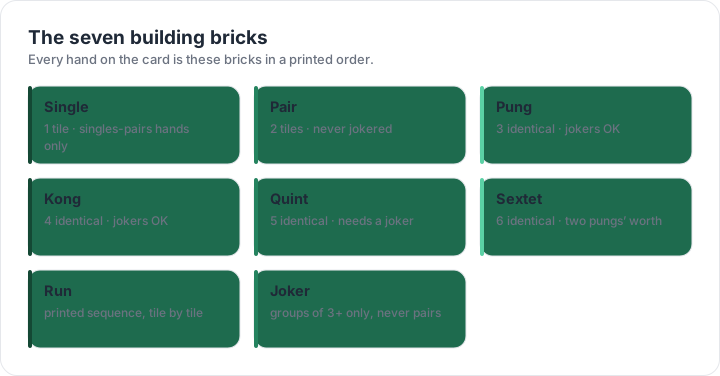
The seven bricks
| Brick | Size | Jokers? | Note |
|---|---|---|---|
| Single | 1 | No | Only in singles-and-pairs hands. |
| Pair | 2 | No | The anchor of most lines; never jokered. |
| Pung | 3 identical | Yes | The workhorse group. |
| Kong | 4 identical | Yes | Called loudly and exposed proudly. |
| Quint | 5 identical | Yes | Impossible without at least one joker. |
| Sextet | 6 identical | Yes | Two full groups of one face. |
| Consecutive run | printed sequence | Per line | Fixed runs printed tile by tile. |
Pairs and pungs in pictures
A pair is exactly two of a face — and the one group jokers can never touch:
A pung is three of a face, the most common group on the card:
A kong is four — a pung that got greedy, exposed as one block:
Where jokers fit
Any group of three or more accepts jokers in any of its slots. The same kong can be assembled three ways; all are legal and identical in value:
The pairs above and below this note are the same kong three ways — two naturals plus two jokers, or any other split. What the card cares about is the group’s face and size, not which tiles are wooden stand-ins.
Consecutive runs
Run lines print an exact sequence, mixing suits as marked. A run like 1-2-3 running through all three suits is three tiles per suit — collect them in order and expose the whole run when claimed from discards, exactly like any other group:
Suit patterns: X, Y and Z
Card lines mark suits with letters rather than naming dots, bams or craks directly. A line that reads X-XXX-YY-ZZZ means: one tile of suit X, a pung of suit X, a pair of suit Y, a pung of suit Z. The letters stay consistent within a section of the card, so once you fix X = dots for your line, every X on that line is dots. Full line-reading practice is in the card guide.
A complete hand, assembled
Putting the bricks together — a typical fourteen-tile shape is five bricks: four groups and a pair, or in singles-and-pairs hands, seven bricks of ones and twos. Here is a textbook shape with a kong, two pungs and two pairs as it might appear structured on a line:
The same logic scales to quints and sextets: five and six of a face are just pungs with more of the same tile, and the card prices them accordingly. What makes American mahjong tractable is that every legal hand is these bricks in a printed order — nothing is ever improvised at the table.
Drills that make recognition automatic
- Sort a random fourteen-tile deal into bricks out loud: “pair, pung, run piece, single.” Two minutes a day.
- Pick one card section and find three lines you could build from the same ten tiles — that is the pivot skill from strategy.
- Play solitaire for face fluency; the pair-matching reflex it builds is the same one that sorts bricks at speed.