First checkpoint: 152 tiles, American-style
The single most common first-buy mistake is a beautiful Chinese set for an American card table. Check the count and the contents:
| Set type | Tiles | Jokers | Plays American card? |
|---|---|---|---|
| American | 152 | 8 | Yes |
| Chinese classic | 136 | 0 | No |
| Chinese with flowers | 144 | 0 | No |
| Japanese (riichi) | 136 | 0 | No |
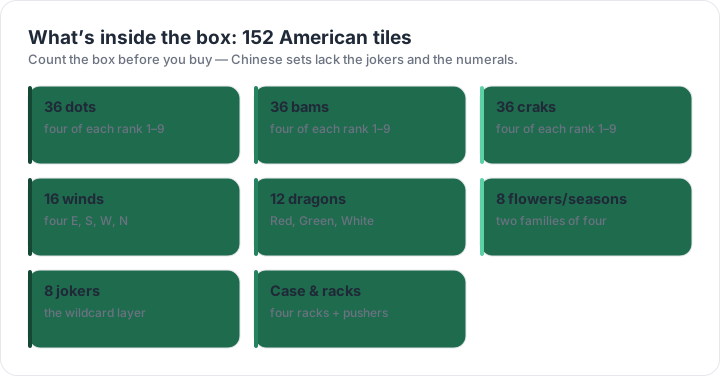
An American set’s 152 = the 144-tile classic core plus eight jokers. Tiles should also carry small Arabic numerals next to the ranks — a uniquely American convenience that saves beginners constant counting.
Materials, honestly ranked
- Urea / melamine plastic — the modern standard: durable, uniform, clacks nicely, wipes clean, survives coffee. Nearly all recommended sets are this.
- Bamboo-backed (two-layer) — the traditional look: bamboo base with a plastic or bone face. Lovely, slightly lighter in the hand; check that faces sit flush.
- Vintage ivory/bone — collector territory: beautiful, expensive, and legally fussy across borders. Not a beginner purchase and beyond this guide’s scope.
- Travel/mini sets — fine for camping, too small for four racks of comfortable play. Your regular table deserves full-size tiles.
Feel matters more than specs. If you can handle a friend’s set before buying, do — the right weight is the one your wrist will happily flip four hundred times an evening.
Racks, pushers and the rest of the kit
- Four racks, not two. American play racks every tile; check a rack holds 19 tiles two-high behind it (38) — that is the wall plus your hand’s workload.
- Pushers (all-in-one or attachable) — the wall-building lever. Once a table has used them nobody goes back; buy racks with built-in pushers if you can.
- Card holders — cheap plastic stands that display the current-year card upright for every player. Four of them cost less than lunch.
- Dice and wind indicators — included in nearly every set; replace freely if lost, nothing about American mahjong is dice-sensitive.
- betting chips/scoring sticks — optional; most tables settle with the calculator and small change.
Price bands and what they buy
| Band | Typical range | What you get |
|---|---|---|
| Starter | $40–70 | Urea tiles, four racks, decent case. Entirely sufficient for years. |
| Enthusiast | $80–150 | Heavier tiles, pusher racks, better cases, cleaner printing. |
| Heirloom | $150+ | Oversized or bamboo-backed tiles, premium cases — a gift-tier purchase. |
| Automatic table | $1,000+ | A different hobby: motorized wall-building for dedicated groups. |
Ranges reflect common retail at the time of writing; shop around — prices move and sales are frequent at game stores and online retailers alike.
The checklist before you pay
- Count announced as 152 with 8 jokers pictured.
- Arabic numerals on dots, bams and craks.
- Four racks included, pushers built in or bundled.
- Tile size 1.2″-ish (30mm) or larger — smaller than that feels like checkers.
- A case that closes — you will transport this thing monthly.
- The current card ordered separately — sets do not include the NMJL card.
Care and feeding
Wipe tiles with a damp cloth; skip alcohol-based cleaners on printed faces. Store the case flat, out of sun (uv yellows plastics unevenly). A torn rack is a ten-dollar replacement, not a set-replacement — check rack availability when choosing a brand. Treat the set well and it outlives the kitchen table it lives on.
Once the set arrives, the fun part starts: the walkthrough takes a new table from unboxing to first mahjong in an afternoon.